

A Wavelength All Her Own
By Rob Weinert-Kendt
Jeanine Tesori believes we are all tuned to one another. Across musicals, operas, and film, the Tony-winning composer has made a career of showing us how, and of making room for other voices alongside her own.
❦
“Something happens when we sing,” the versatile composer Jeanine Tesori likes to say, adding that “the earth is tuned for consonance—we are tuned. We are sympathetic strings.”
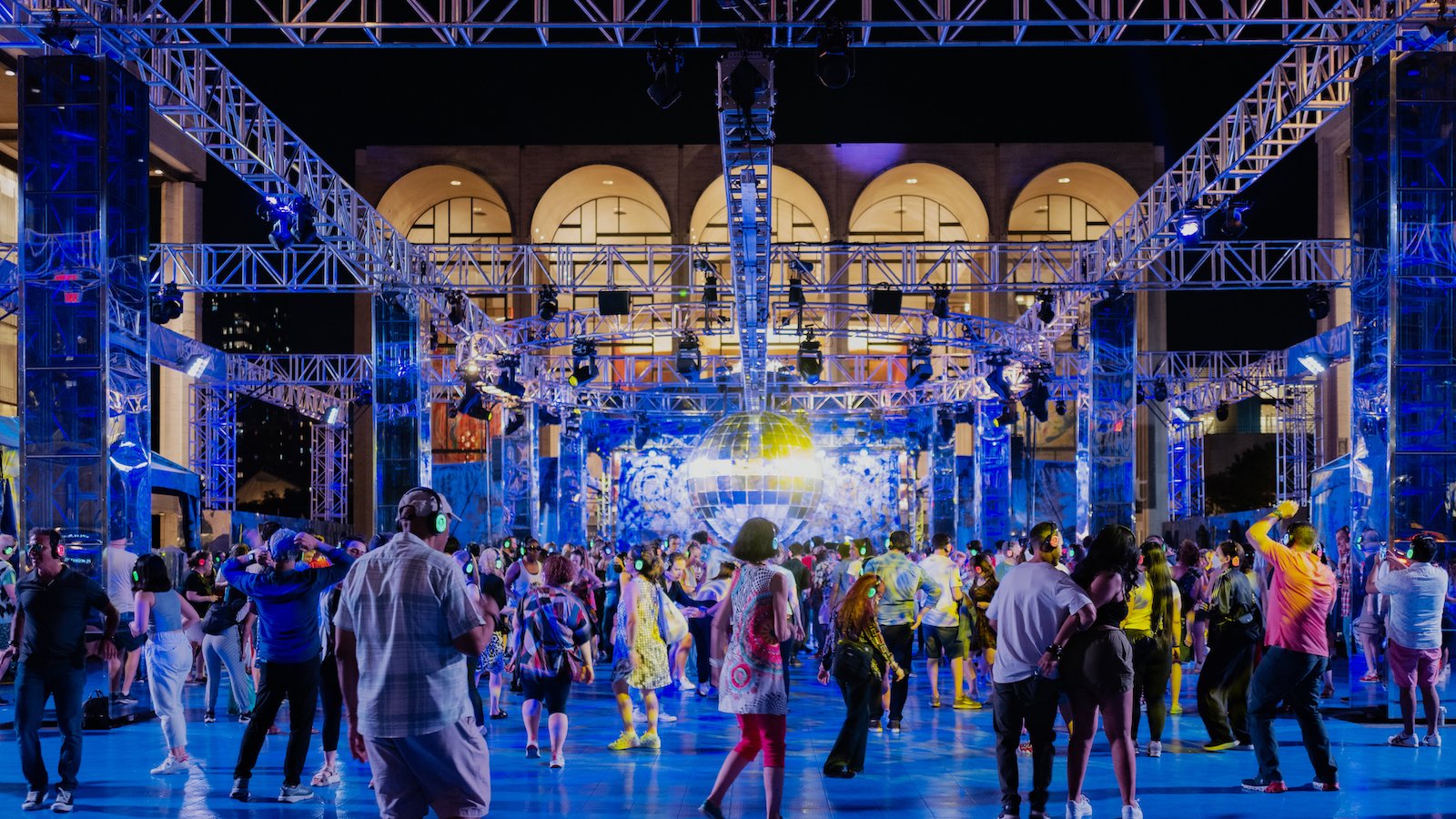
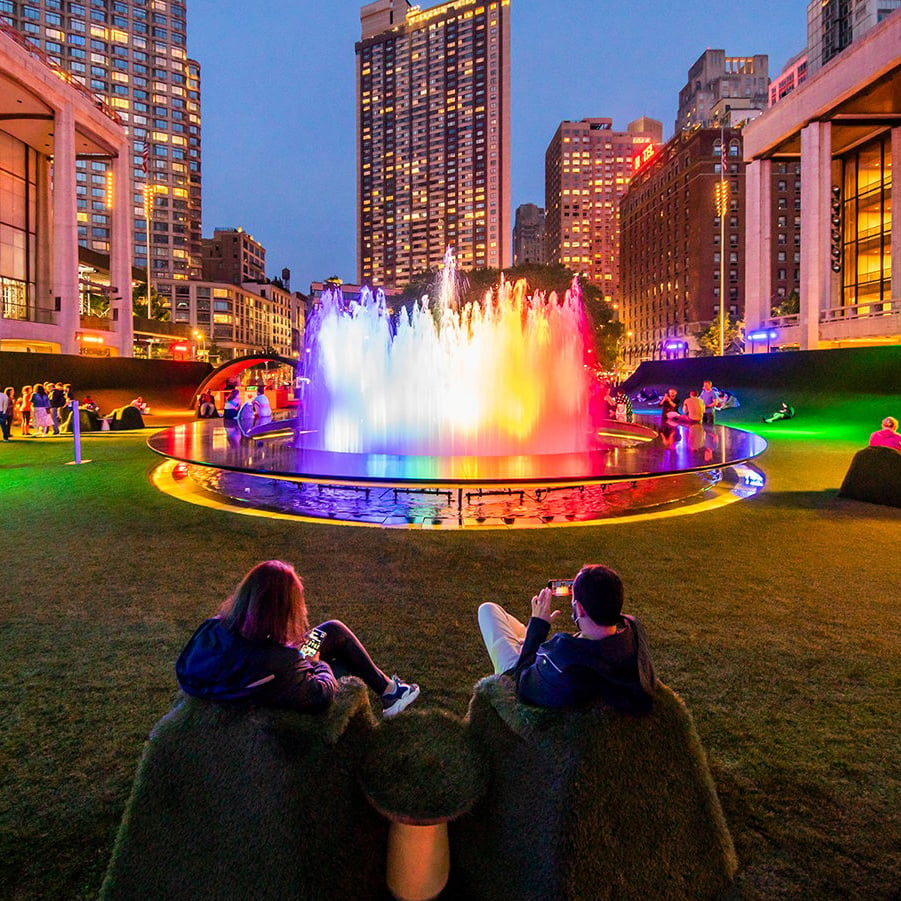
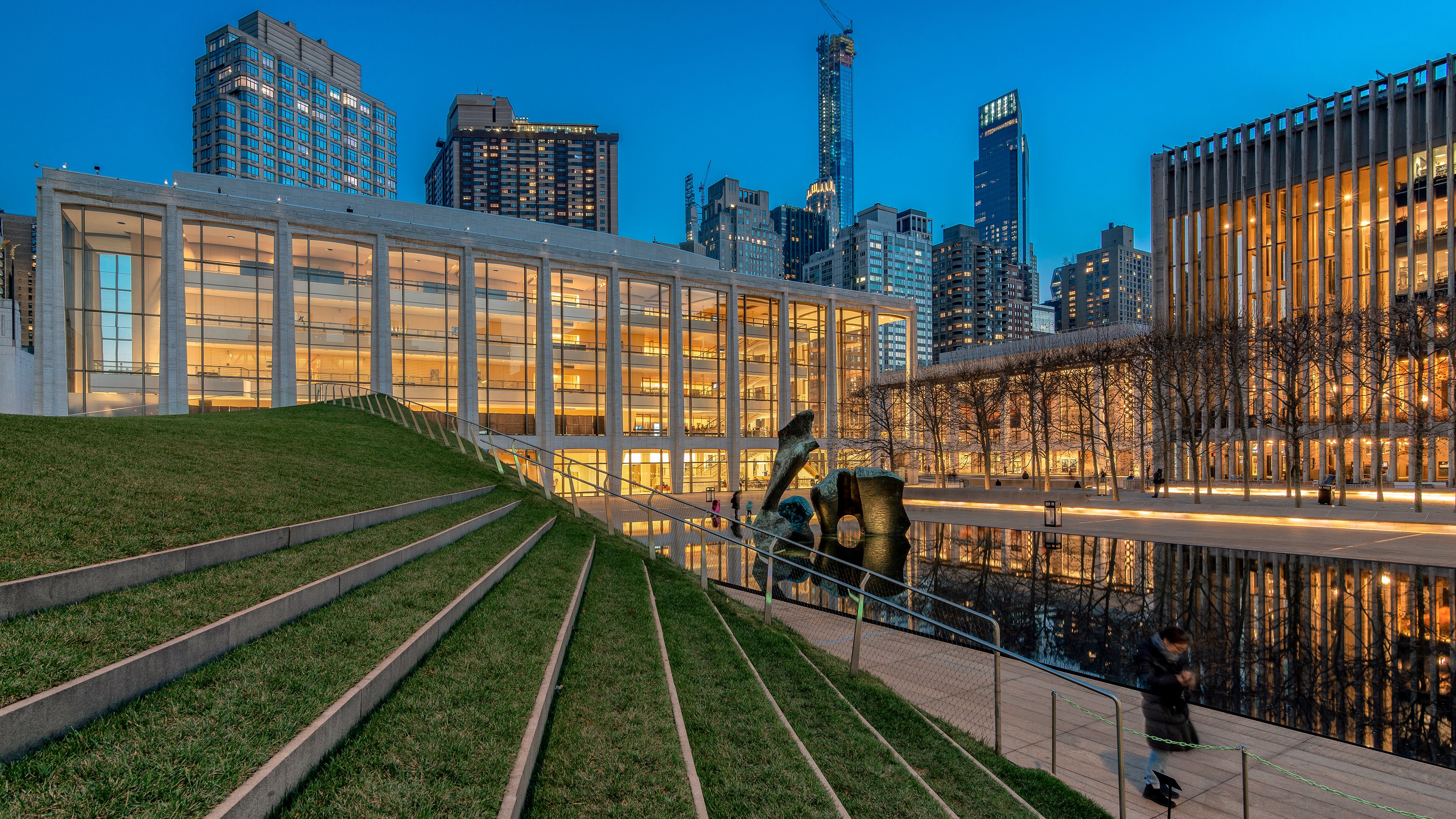
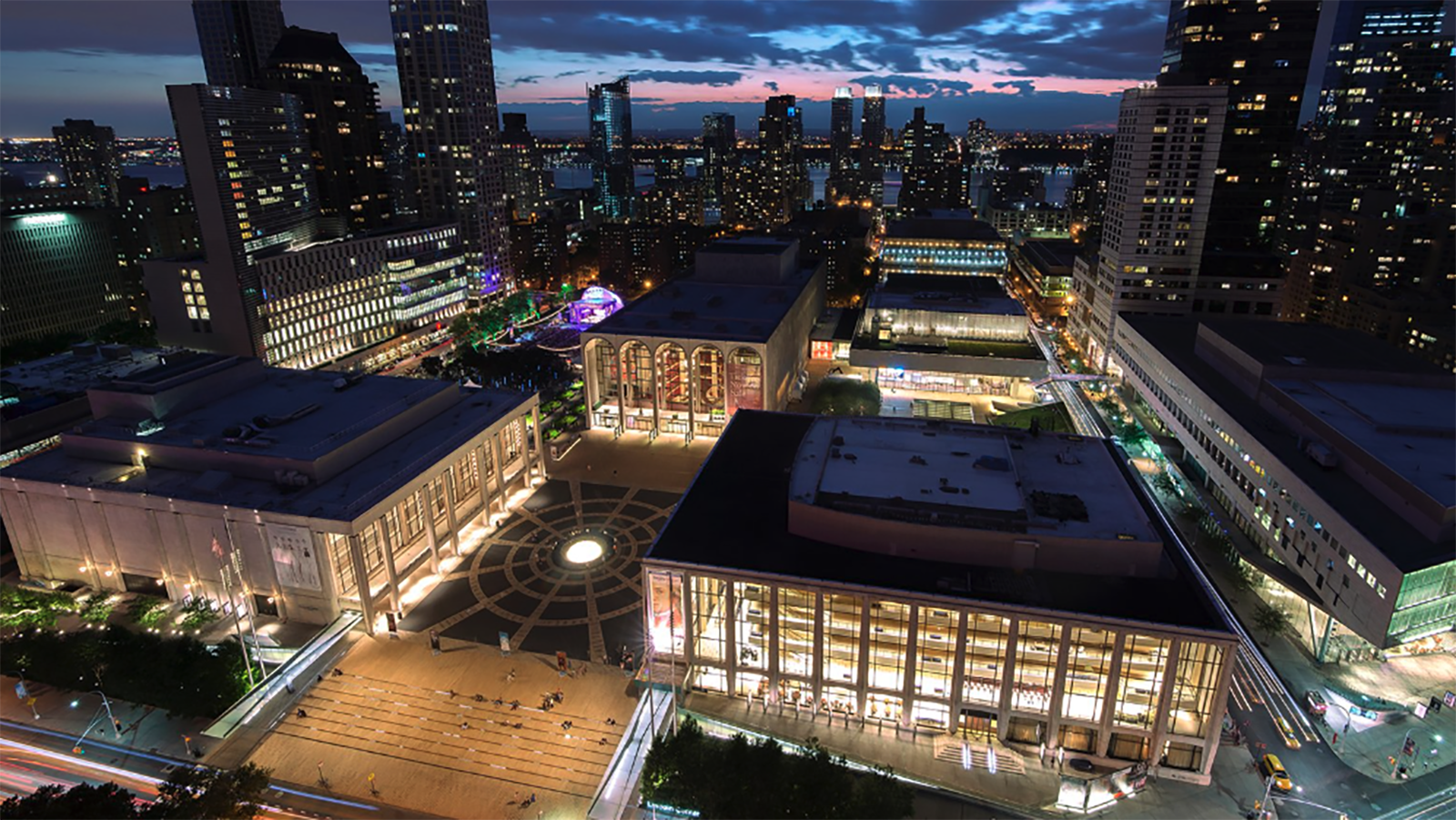
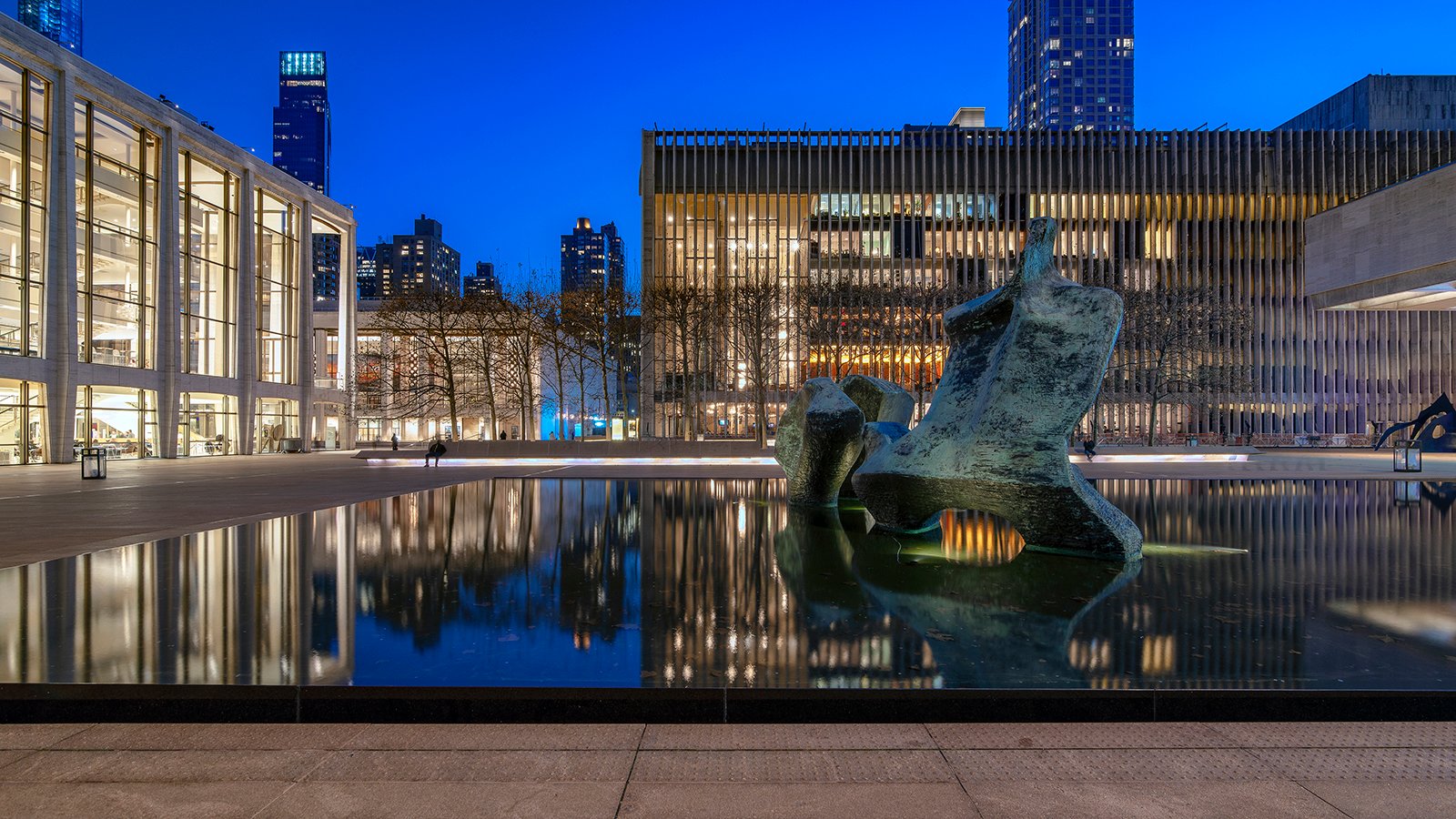
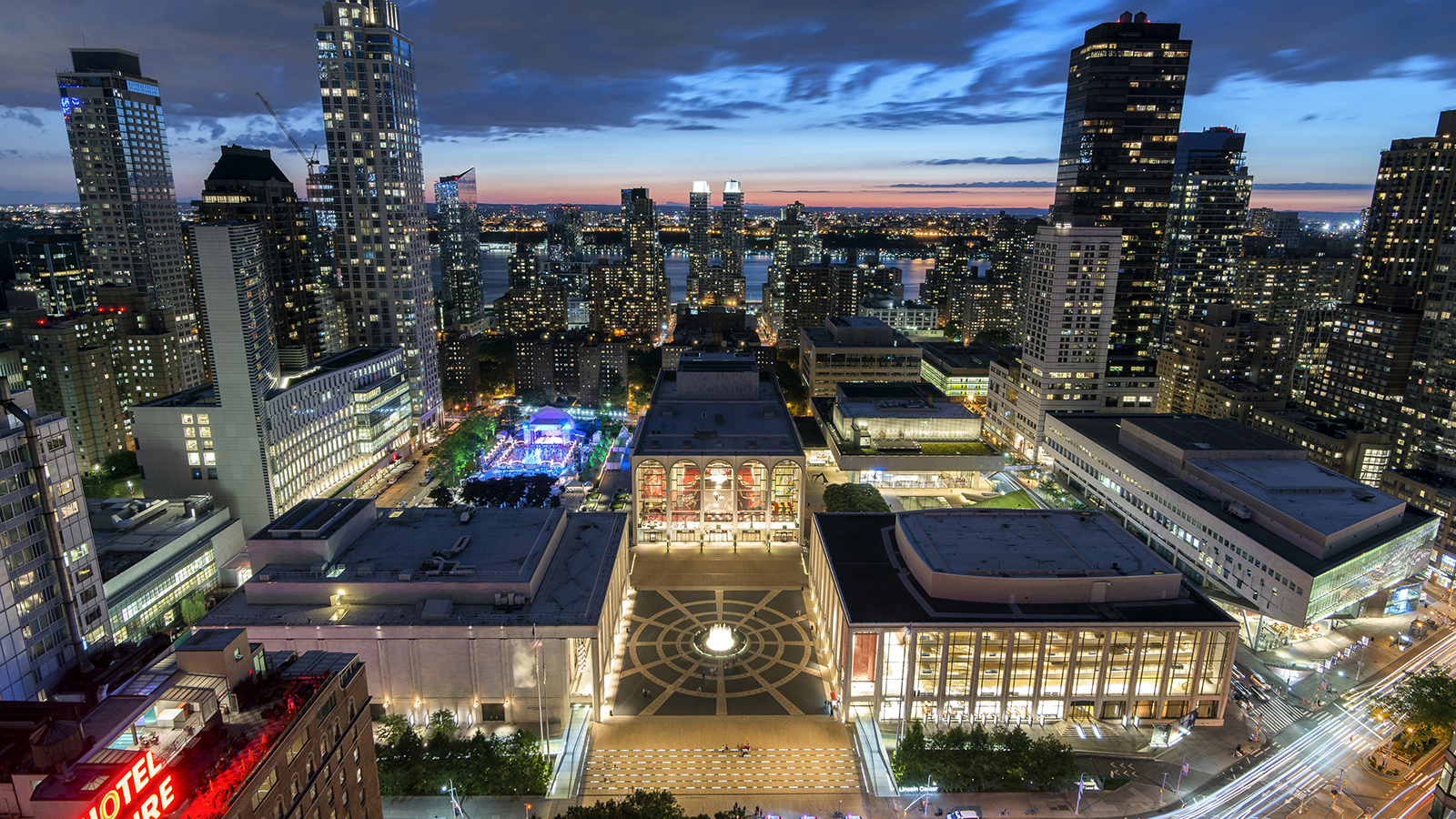
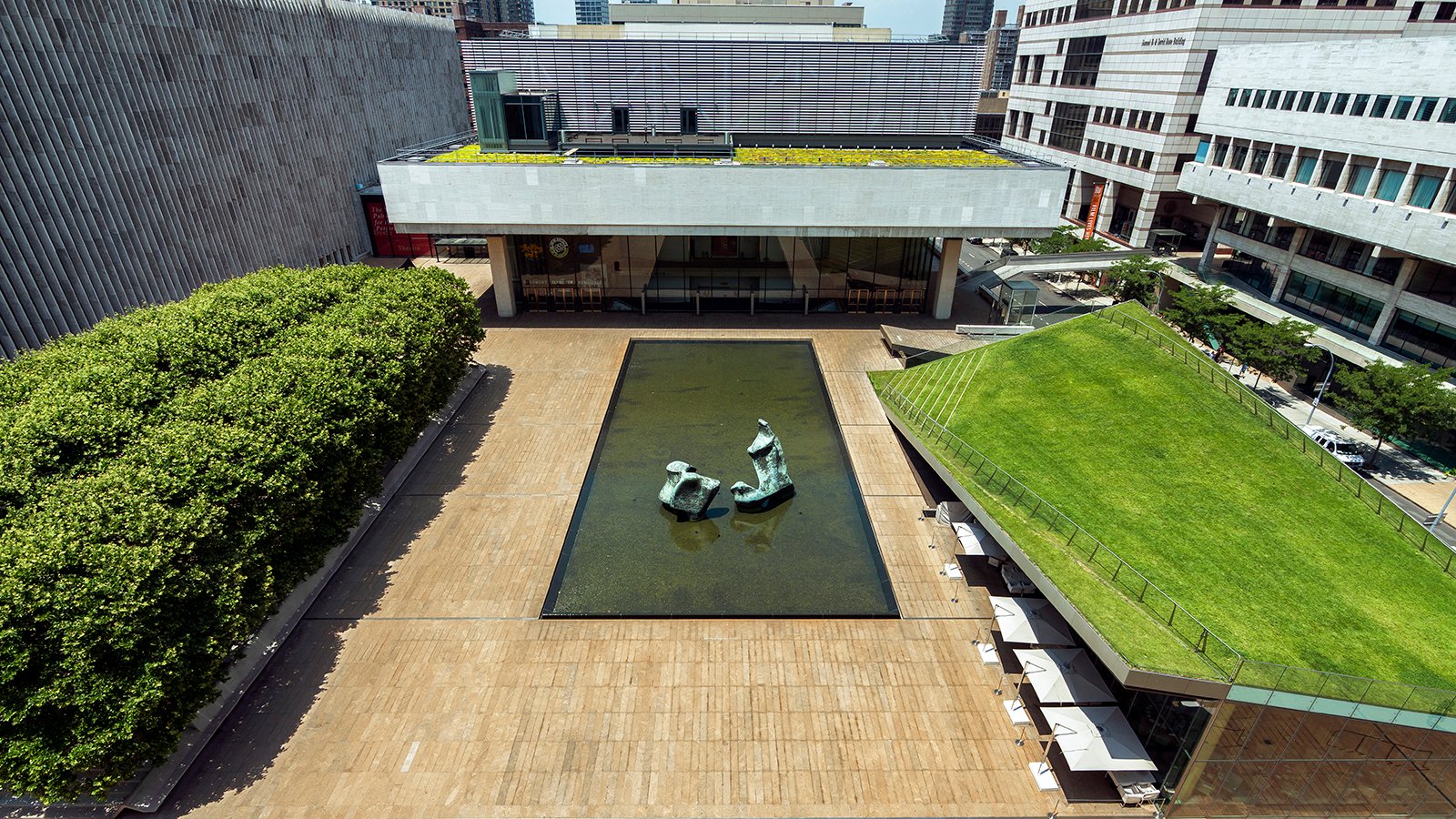
You might say that a sympathetic string, or at least a thread of joy and possibility, thrummed across the past season at Lincoln Center, where the Tony-winning Tesori was honored as the center’s Visionary Artist with concerts, screenings, panel conversations, and inclusive community gatherings. Curated by Tesori and a team of producers under Lincoln Center’s Chief Artistic Officer, Shanta Thake, the season featured a few fresh productions or reimaginings of Tesori’s own work, but also put a large part of its focus on the artistry of her collaborators and colleagues. The festivities spanned many venues and spaces across Lincoln Center, from the Josie Robertson Plaza and David Geffen Hall, to The Juilliard School, the New York Public Library for the Performing Arts, Film at Lincoln Center and Jazz at Lincoln Center.
Early in her residency in Fall 2025, Tesori told me in an interview, “The thing I’m trying to do at this point in my career are partnerships. And I go across many genres, from film to theater to opera to teaching.” So it made sense, to her and to the season producers, to have the offerings include many other voices, and to unfold across Lincoln Center, where, as Tesori put it, with infectiously childlike glee, “There are so many spaces here that are really fun to get into, right?”
Thake, who as Artistic Officer worked with Tesori to shape the season, said that the very curation of Tesori’s program was “a testament to who she is as a person, because every conversation just brought up seven new ideas of people in her life that she wanted to uplift, stories that she remembers from backstage, onstage. Figuring out how to hold all of the amazing ideas and strands of her life, while also celebrating all of the artists that she loves, was a great challenge of this Visionary Artist residency.” Thake added, “I think there are many audiences that know Jeanine’s theater work that don’t know her opera work, or vice versa. So the chance for these audiences to find that the artist that they love in one form is actually so expansive is really exciting to all of us.”
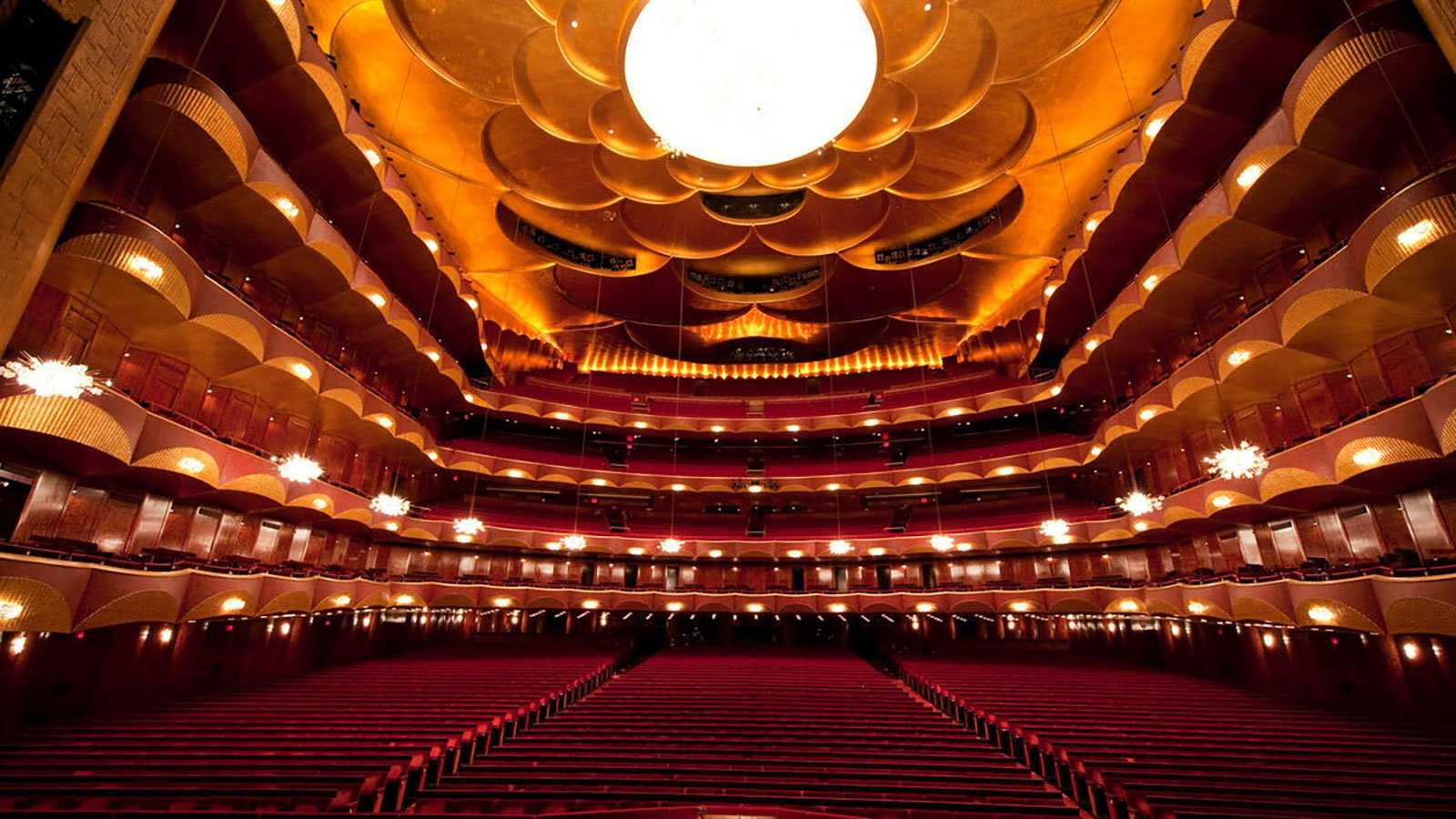
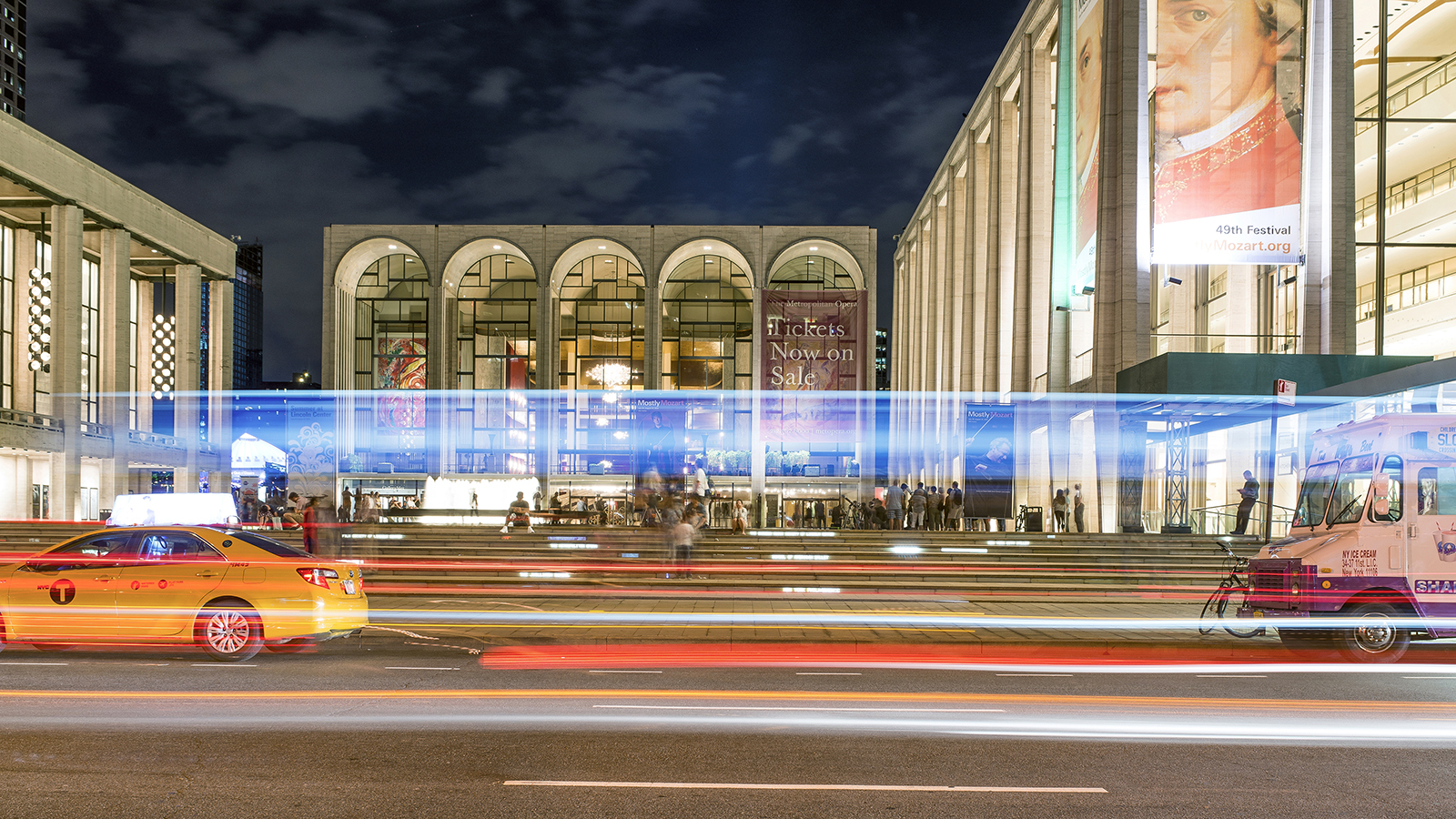
Tesori’s association with Lincoln Center began with one of her earliest career breakthroughs, when, in 1998, not long after her Off-Broadway debut with the musical Violet, she composed original music for Nicholas Hytner’s production of Twelfth Night at Lincoln Center Theater. In the years since, she has worked primarily at New York’s Public Theater (Caroline, or Change, the Tony-winning Fun Home, Soft Power, a Shakespeare in the Park staging of Mother Courage), as well as in the commercial arena (Thoroughly Modern Millie and Shrek) and at the Atlantic Theater (Kimberly Akimbo, which nabbed her second Tony after it moved to Broadway). But her association with Lincoln Center picked up again around 2015, when she became one of the first women commissioned by the Metropolitan Opera to write a new work for their stage, and in 2024, with Grounded, was the first to have an original opera produced there (after the work’s 2023 debut at the Kennedy Center). So, it was only fitting that her Visionary season kicked off with an August screening of the Met’s HD film capture of Grounded on the Plaza.
For the writing of Grounded with George Brant, on whose play the opera is based, Tesori worked closely with the Canadian mezzo-soprano Emily D’Angelo, shaping the lead role of Jess, a U.S. Air Force drone pilot, to her unique voice and persona, in a process that D’Angelo still marvels at. “She didn’t just write it and ship us the score and say, ‘Good luck,’” said D’Angelo. “She was there for every moment, every discovery, and the work really never ended until opening night for her.” Echoing the sentiments of many of Tesori’s collaborators, D’Angelo said, “Her characters are real, whether they’re fictional or not. They become real through her exploration of who they are, their psychology, and how she marries that with the music.”
That is also abundantly true of Tesori’s other major entry in the genre, Blue, which was commissioned by the Glimmerglass Festival in 2015 and first staged there in 2019. It has since appeared across the U.S. and Europe but, until last fall, had never been heard here in New York City, Tesori’s hometown. Indeed, when she was first contacted about the Visionary Artist season, Tesori said that Blue was the one work of hers that she was insistent on programming as part of the season.
The oft-told story of Blue’s gestation begins with Tesori and librettist Tazewell Thompson considering a timely subject: a Black teen shot by the police, and the fallout of that violence on his family and community. Tesori suggested that the boy’s father also be a cop. As a Black man from Harlem with his own history of being profiled and harassed by law enforcement, Thompson at first instinctively recoiled. “I think I said, ‘Absolutely not, never going to happen,’” he recalled. But as his meeting with Tesori went on, Thompson was quietly thinking to himself, “Wait a second. What a conflict that would be!” By the meeting’s end, he suddenly told her, “‘That’s it. He’s going to be a police officer,’ and Jeanine said, ‘Who’s going to be?’ And I said, ‘Your idea! That the father should be a police officer.’” The lesson, Thompson concluded, was that Tesori “understands conflict. It was a tremendous awakening for me.”
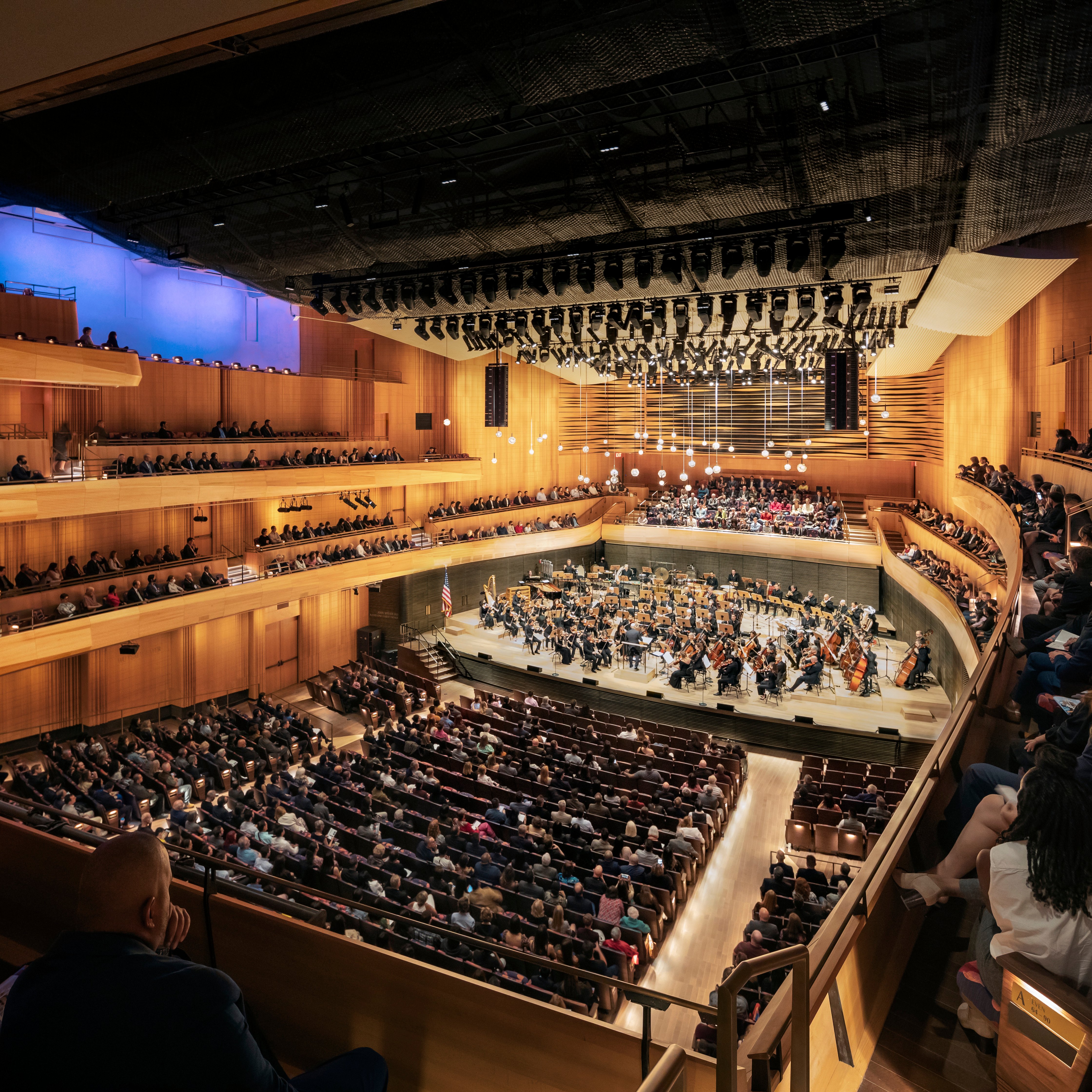
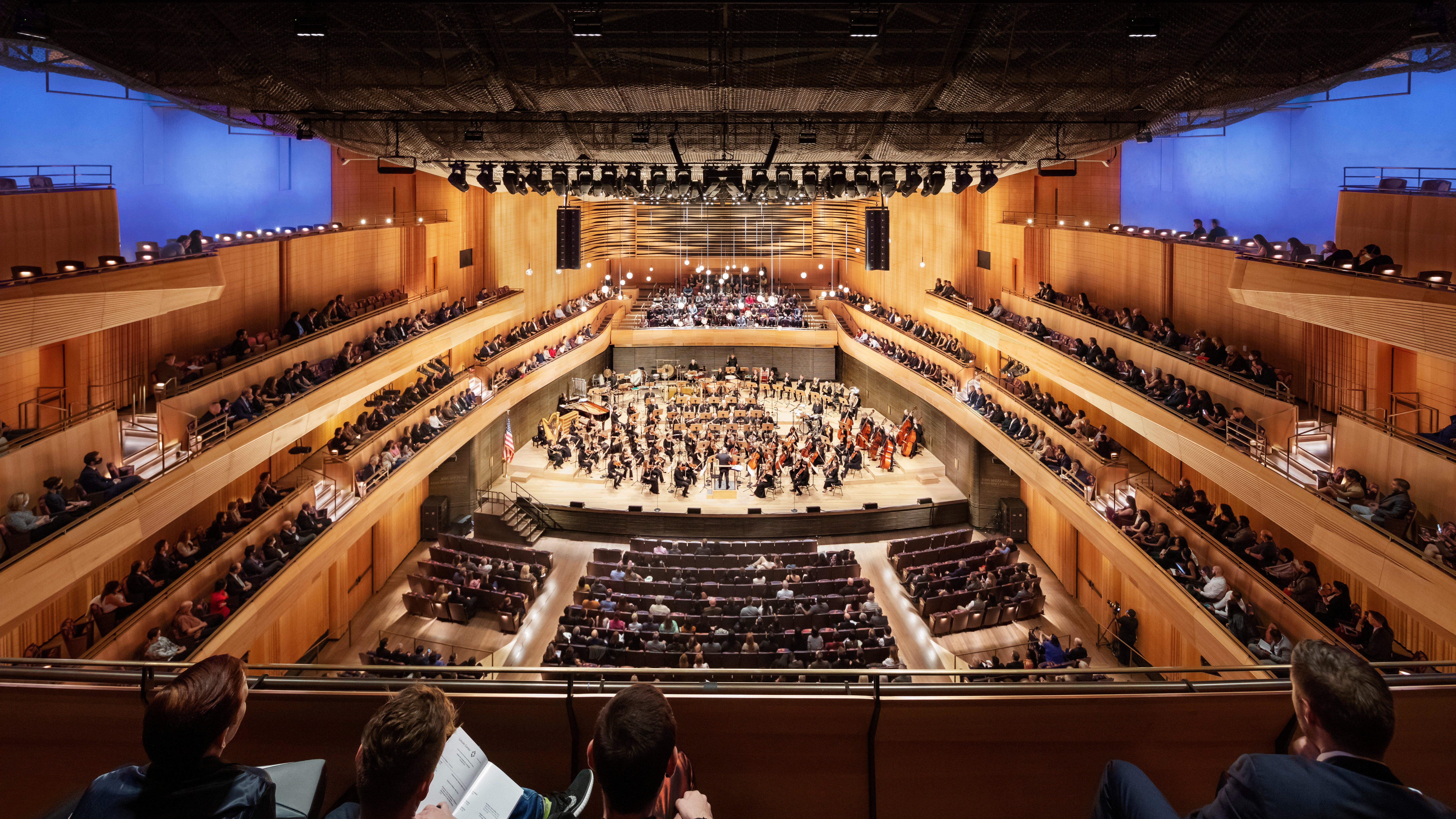
That conflict and heartbreak took stunning shape one night in November 2025, when Blue, a highlight of the residency, had its belated New York homecoming on the Wu Tsai stage of David Geffen Hall. Thompson directed the co-presentation by Lincoln Center for the Performing Arts, Lincoln Center Theater, and the Metropolitan Opera. To tell this wrenching contemporary story, Tesori’s score draws on gospel, blues, and pop as much as classical music, and the concert version, under conductor Joseph Young, was accordingly cast with performers as well versed in musical theatre and pop as in operatic technique, to lean into the “hybridity of where we are,” as Tesori put it. She was especially gratified that concert organizers were able to pull together a 250-member volunteer community choir, who, from balcony seats behind and around the stage, thundered out the work’s mighty chorales under Deborah Simpkin King’s direction. “It was astonishing,” Tesori said.
“I think there are many audiences that know Jeanine’s theater work that don’t know her opera work, or vice versa. So the chance for these audiences to find that the artist that they love in one form is actually so expansive is really exciting to all of us.”
— Shanta Thake
No less invigorating was “Reimagining Justice,” a conversation Tesori and Thompson hosted a week earlier in the Kenneth C. Griffin Sidewalk Studio at David Geffen Hall. They were joined by author Susan Sturm (What Might Be: Confronting Racism to Transform Our Institutions) and poet Bryonn Bain to explore some of the themes and context of Blue, from mass incarceration to racialized policing. Tamara Jade sang a stirring excerpt from the opera, while Bain performed a piece from his multimedia work Lyrics From Lockdown and Sturm read from her book about, as she put it, the “loving struggle that has come to be at the center of my life.”
That conversation reached well beyond the room. Its audience included not only those gathered in person at the Griffin Studio but also incarcerated people watching via livestream from the Taconic Correctional Facility among other prisons.
❦
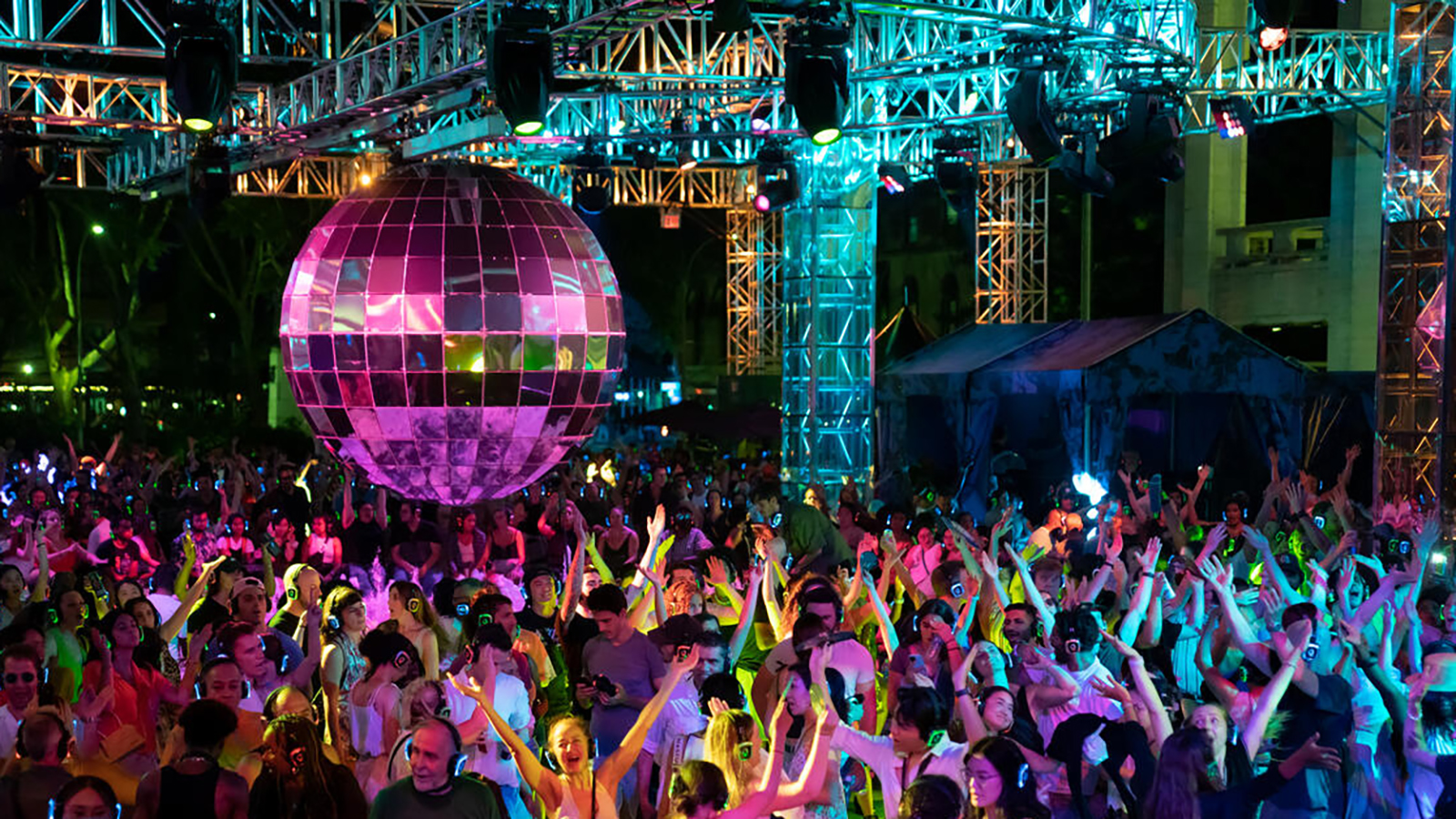
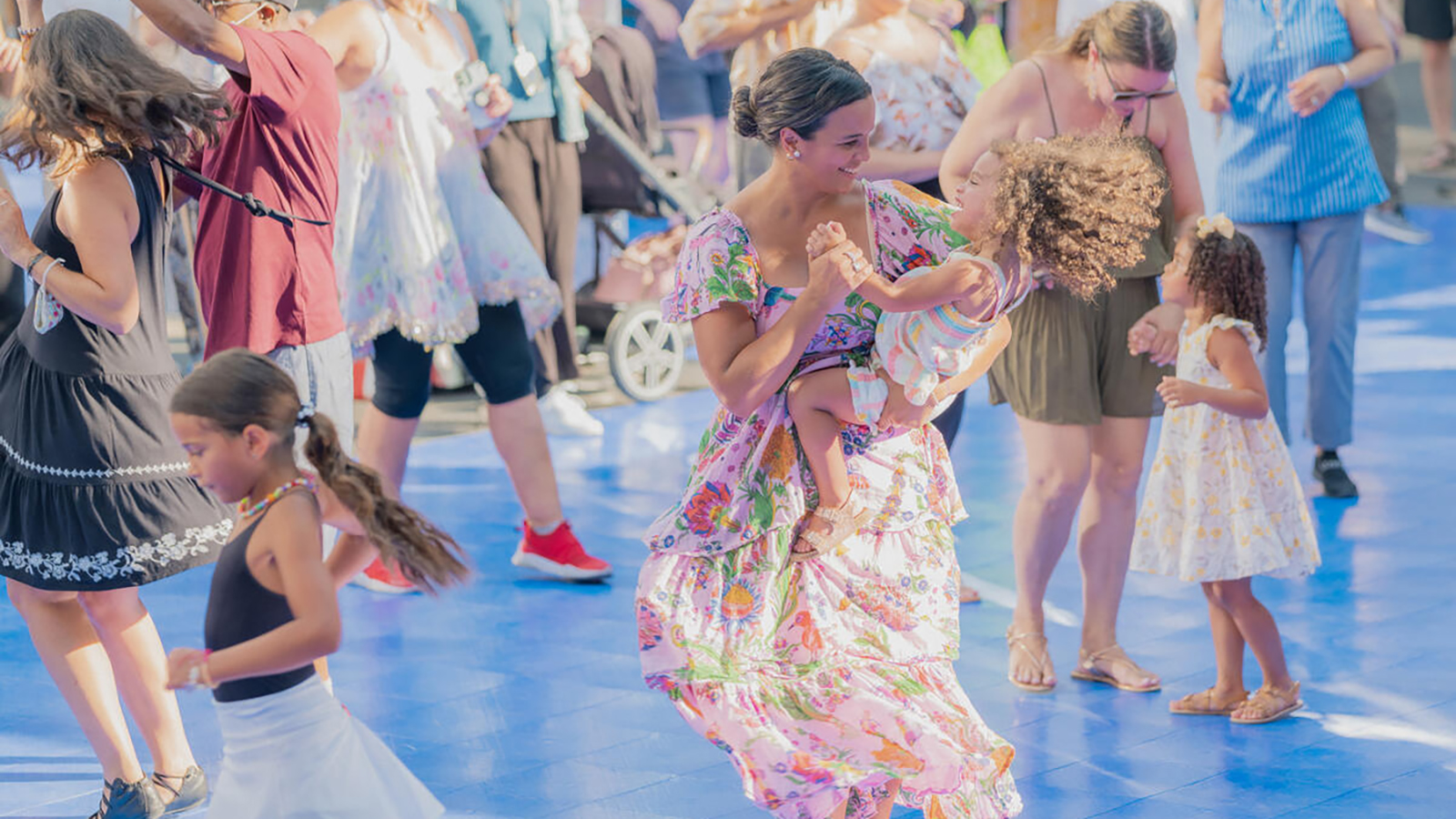
A similar spirit of inclusion infused all the offerings in Tesori’s Visionary season, especially “Come & Sing,” a series of free, open gatherings at which audiences were invited to do just that. At each one, attendees became a spontaneous community choir. The first, in David Geffen Hall’s Wu Tsai Theater, was part of Lincoln Center’s family-oriented Open House in October 2025, and featured tap dancer Ayodele Casel and percussionist John Clancy. Later came gentle, song-driven sessions with composers Daniel and Patrick Lazour, an open concert led by composer-conductor Troy Anthony and a concluding gospel throwdown with music director Allen René Louis and pianist Joseph Joubert. The series has continued into the current season, as clear a sign as any of the impact of Tesori's program.
“A thing that I wanted to remind people of is that we have so many artists in the audience—a lot of people have trained in the arts, and not a lot of people can sustain a career. But everywhere you go, you find people who are very, very good at many, many things.”
— Jeanine Tesori
Alongside these secret powerhouses are young people, newcomers, and neurodiverse attendees who benefit from the radical welcome of relaxed performances. At one “Come & Sing” concert, I watched a girl who couldn’t have been older than three years old race up and down the aisle with giddy excitement. In this context this wasn’t disruptive, but altogether in the spirit of the thing.
“I love the relaxed performances, because they’re not just for people with different needs,” Tesori said. “It means that everybody can relax. And I think a relaxed performance is actually a portal for something else to happen.”
A March 2026 performance at Alice Tully Hall opened a new portal into one of Tesori’s signature works. It was presented by Deaf Broadway, an organization that performs musicals in American Sign Language to the accompaniment of cast album recordings. In this case it was Violet, Tesori and Brian Crawley’s 1997 musical about a young girl disfigured by an accident seeking out a faith healer but finding hard-won love instead. Erin Rosenfeld played the lead role movingly, and in the crucial role of her father was Tyrone Giordano, no stranger to Deaf musicals (he played Huck in Deaf West’s groundbreaking Deaf/hearing rendition of Big River, back in 2003).
Violet was revived on Broadway in 2014 with Sutton Foster in the lead, and indeed Foster has been a sort of recurring muse for Tesori, from Thoroughly Modern Millie to Shrek to the upcoming Coal Miner’s Daughter. With that connection in mind, Tesori convened “The Composer & The Muse,” a conversation about creative process, at the Library for the Performing Arts in April 2026. Joining her were Foster and two other women for whom she’s written musical roles: Grounded’s Emily D’Angelo, who again marveled at the composer’s endlessly adaptive approach to writing for her voice, and Victoria Clark, who won a Tony for playing a teenager (of sorts) in Tesori and David Lindsay-Abaire’s Kimberly Akimbo.
Tesori teed up the conversation by questioning its terms. “When we think of a muse, it has a sort of passive quality, like a muse is a blank canvas,” she said. But, referring to the term’s Greek origins—the Muses were the nine daughters of Zeus and Mnemosyne, and they were hardly shrinking violets—Tesori recast the creative process as “the divine collaboration. It’s active. It has agency.”
Indeed, each performer related stories of how Tesori shaped musical roles with their active involvement, from Foster’s account of “Gimme Gimme,” the 11 o’clock number she slotted into Thoroughly Modern Millie at the last minute in out-of-town tryouts, to a revealing visit with D’Angelo’s voice teacher, in which Tesori probed the limits and reaches of the mezzo’s instrument. Clark spoke about first turning down the role in Kimberly Akimbo when Tesori told her the score would have a pop-rock sound, then realizing that the composer had written “perfectly in my voice; it just felt very natural and folky and perfect.” Turning to Tesori, Clark said, “You made me realize I was still relevant, and that my voice still has so much life to it, so much bounce and joy. Those initial meetings with you taught me to love myself and my voice again.”
While Tesori tried to steer the conversation away from praise for her, she could have been speaking for herself as much as for the other women onstage when she said, “The beauty of new work is that you’re changed by it.”
Her commitment to new work shone on another night in April, when Natalie Brown, a former student of Tesori’s, premiered a concert version of for colored girls at Jazz at Lincoln Center’s breathtaking Appel Room. This musical adaptation of Ntozake Shange’s pathbreaking choreopoem — a fusion of poetry, dance, and music — was presented as part of Lincoln Center’s American Songbook. Brown herself headed a cast of seven powerhouse performers, under Ellenore Scott’s inspired direction and choreography, with Sam Appiah leading a jazz quartet from the piano. Its defiant standout number, “My Stuff,” garnering a standing ovation mid-show. Like Blue, this is a hard-to-classify hybrid piece that deserves to be staged often and everywhere.
Tesori first heard selections from the score when Brown was studying composition with her at Yale. “Immediately I said, ‘Let’s get you the rights, and I hope you’ll flesh it out,’” Tesori recalled. On the evidence of the April concert: mission accomplished.
❦
"What does it mean to be a visionary artist? To be somebody like Jeanine Tesori. Her work spans genres, and can’t be contained by just one organization or one entity. So to celebrate her across this campus is so deeply appropriate.”
— Lear deBessonet, Artistic Director of Lincoln Center Theater
Alongside Tesori’s devotion to new work is an equal and abiding passion for the history of the art form—a predilection she indulged in various events throughout the Visionary residency. At “Swans of Harlem,” an April 2026 event at List Hall, she joined author Karen Valby and archivist Dr. Maurice Wheeler for a look back at the legacy of five groundbreaking Black ballerinas from Dance Theatre of Harlem (one of whom, Marcia Sells, was Tesori’s resident assistant at Barnard). And after a screening that same month of Steven Spielberg’s West Side Story at Film at Lincoln Center, Tesori, who worked with the film’s performers as a vocal producer, spoke about following “the treasure map” of a great score to find the work’s original impulses so that “it feels like the actors are making it up. New work is incredibly important—but repertoire was new work at some point.”
And with David Lindsay-Abaire, the Pulitzer-winning playwright with whom she wrote both Shrek and Kimberly Akimbo, Tesori hosted “The Lineage of Laughter,” a conversation at the Juilliard School about the work of the late, great absurdist dramatist Christopher Durang. Durang, the author of such classics as Beyond Therapy, The Marriage of Bette and Boo, and Sister Mary Ignatius Explains It All for You, influenced Lindsay-Abaire not only as a writer but as a teacher: Lindsay-Abaire now holds Durang’s former post as head of the playwriting program at Juilliard, alongside Tanya Barfield.
Lindsay-Abaire recalled how a high school production of Durang’s A History of the American Film “sort of exploded my idea of what a play could be and do. Up until that point, there were funny plays and there were serious plays, but there was such a mayhem in this play—he broke so many rules that I said, I need to find out more.” What he admired about Durang’s work, he said, is that “as ridiculous as so many of his plays were, they were always grounded in a truthfulness, a pain, an anger—in something that felt deeply human.”
"She has the capacity and the desire to understand different communities and make that part of her work, and to tell that truth through the musical skills that she has."
— David Henry Hwang
That resonates with a theme sounded by those who have worked with Jeanine Tesori over the years: that she connects with the inner lives of the characters she writes music for, in service of stories as complicated and diverse as the world we live in. “I think it’s fascinating how Jeanine has managed to become part of stories from different marginalized communities that she herself is not necessarily a member of,” said David Henry Hwang, with whom she wrote the extraordinary meta-musical Soft Power. He cited not only the show’s Asian American milieu but also the LGBTQ narrative of Fun Home with Lisa Kron; the Black culture reflected in Blue; and the Black-and-Jewish divide dramatized in Caroline, or Change, written with Tony Kushner.
“She has the capacity and the desire to understand different communities and make that part of her work, and to tell that truth through the musical skills that she has,” said Hwang. “She is incredibly empathic, and really curious—she wants to learn, and she works hard to understand communities she was not born into. And with the voluminousness of her musical talent—you put those together, and you have someone who has the capacity to be that large as an artist.”
Speaking to the capacity both for vastness and specificity, Victoria Clark said, “Her music is the way the soul sounds, and every soul is different. So every show is different, and every character different.”
Of the blend of influences and styles in her work, Emily D’Angelo said, “Jeanine has a huge amount of freedom in her work. I don’t feel like there’s one thing that she’s doing over here, and another thing she’s doing in a separate genre. She is Jeanine, and Jeanine transcends genre. She transcends labels and categorization. She just is an artist. Whatever she picks up, there’s a way for it to be powerful and beautiful.”
Damian Woetzel, President of the Juilliard School, lauded “the sense of direction that flows through her work. Whether it’s with students or with people in the industry, there’s a directness and sense of truth. That is the definition of vision.”
"The sense of direction that flows through her work. Whether it’s with students or with people in the industry, there’s a directness and sense of truth. That is the definition of vision.
— Damian Woetzel, President of the Juilliard School
Picking up on the visionary theme, Lear deBessonet, Artistic Director of Lincoln Center Theater, said simply, “What does it mean to be a visionary artist? To be somebody like Jeanine Tesori. Her work spans genres, and can’t be contained by just one organization or one entity. So to celebrate her across this campus is so deeply appropriate.”
At several events throughout the season, I watched Jeanine preside over conversations, joke with colleagues and audience members, and embrace the spotlight only to the extent that she could also share it with others. At a “Come & Sing” event in the lobby of the Vivian Beaumont Theater, as the Lazours taught an all-ages group a number of songs from their show Night Side Songs, I witnessed a bit of the adaptive intelligence that many of her colleagues had praised: spotting a rowdy toddler who was a little too eager to bang on a hand drum he’d been provided, she quietly but firmly got into his space, honoring his energy while drawing it back to the rhythm at hand.
And I saw the love for Jeanine strikingly embodied at the closing of Deaf Broadway’s Violet, when the Deaf performers, led by Garrett Zuercher, honored Tesori with a custom ASL name sign of her own: the letter “J,” a fist with an extended pinky finger, held over one’s heart. All humans may be tuned to a universal frequency, as Tesori insists, but clearly she is on a wavelength all her own.
About the Author
Rob Weinert-Kendt is editor-in-chief of American Theatre and writes about theater and culture for America, the Jesuit magazine. He was the founding editor-in-chief of Back Stage West, and his work has appeared in The New York Times, the Los Angeles Times, Time Out New York, The Village Voice, and Variety, among others. A member of the BMI Lehman Engel Musical Theatre Workshop, he also serves as music minister at Greenpoint Reformed Church.